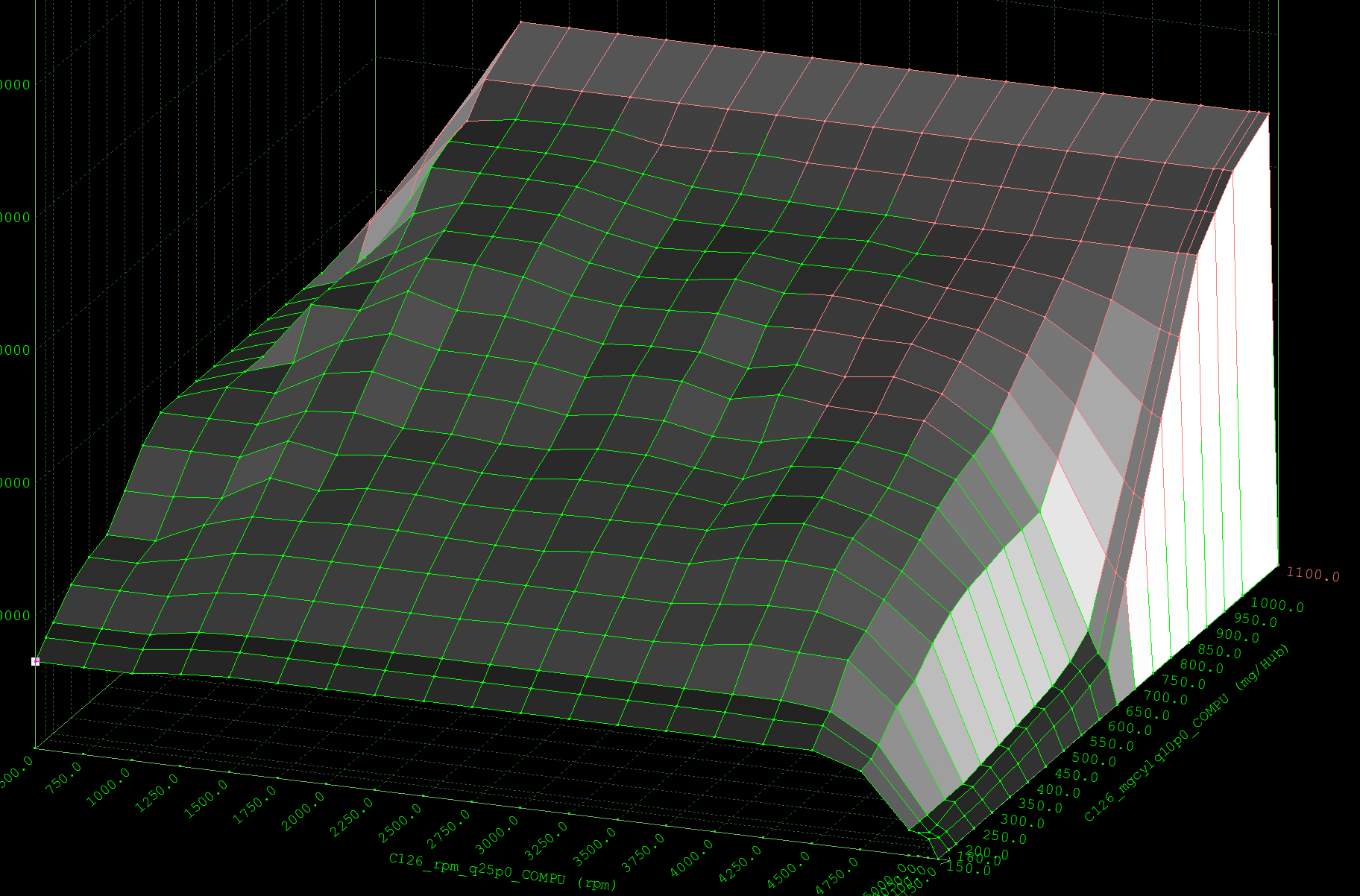
The 1.5 BlueHDI comes in a variety of power variants, but the tuning method remains mostly the same between each version. This ECU uses an internal torque model which also accounts for internal friction losses to result in the flywheel torque. When working on the software we only work with internal torque, so some values may seem high if you’ve not subtracted the drag torque.
The MD1CS003 is very similar to the older EDC17C60 with a few small additions. There are lots of monitoring functions in the ECU, if you adjust a map you usually have a few monitoring maps to adjust to prevent the ECU from giving a torque monitoring fault. This give s a lot of tuners a big headache, but if you know where these are and keep everything correctly calibrated there is no need to disable the monitoring functions.
To make a basic stage 1 remap for the MD1CS003 ECU we typically need to change a total of 250 3D maps, 2D curves and single value limiters combined. The later versions from 2020 onwards are even more complicated with axes moved away from maps and usually 400 maps need to be altered. This can sometimes take up more than a days work if you are working on a software variant that is not similar to any previous projects, especially if the maps are different too and you need to adjust them all.
We’ve built proprietary machine learning software which can identify and change individual tuning maps based on exact matches, this is not only precise, it also can’t make a mistake. This is the first step to making a remap, then the software must be manually checked to make sure all required maps are altered. The speed increase thanks to our software has enabled us to prepare a stage 1 remap for just about ever software version of the MD1CS003 that we have managed to source, that means we can get jobs done quickly without the customer needing to wait, and it means our file service is fast and precise. All the hard work has already been done and checked. Currently we have almost 200 software versions for the 1.5 Blue HDI engine including the 75, 100, 120, 130 BHP variants.
Lets start by talking about some of the maps which need to be altered for a basic stage 1 remap.
The ‘drivers wish map’ converts the drivers pedal request in to an internal torque for the ECU. On this ECU there are typically 10 drivers with maps.
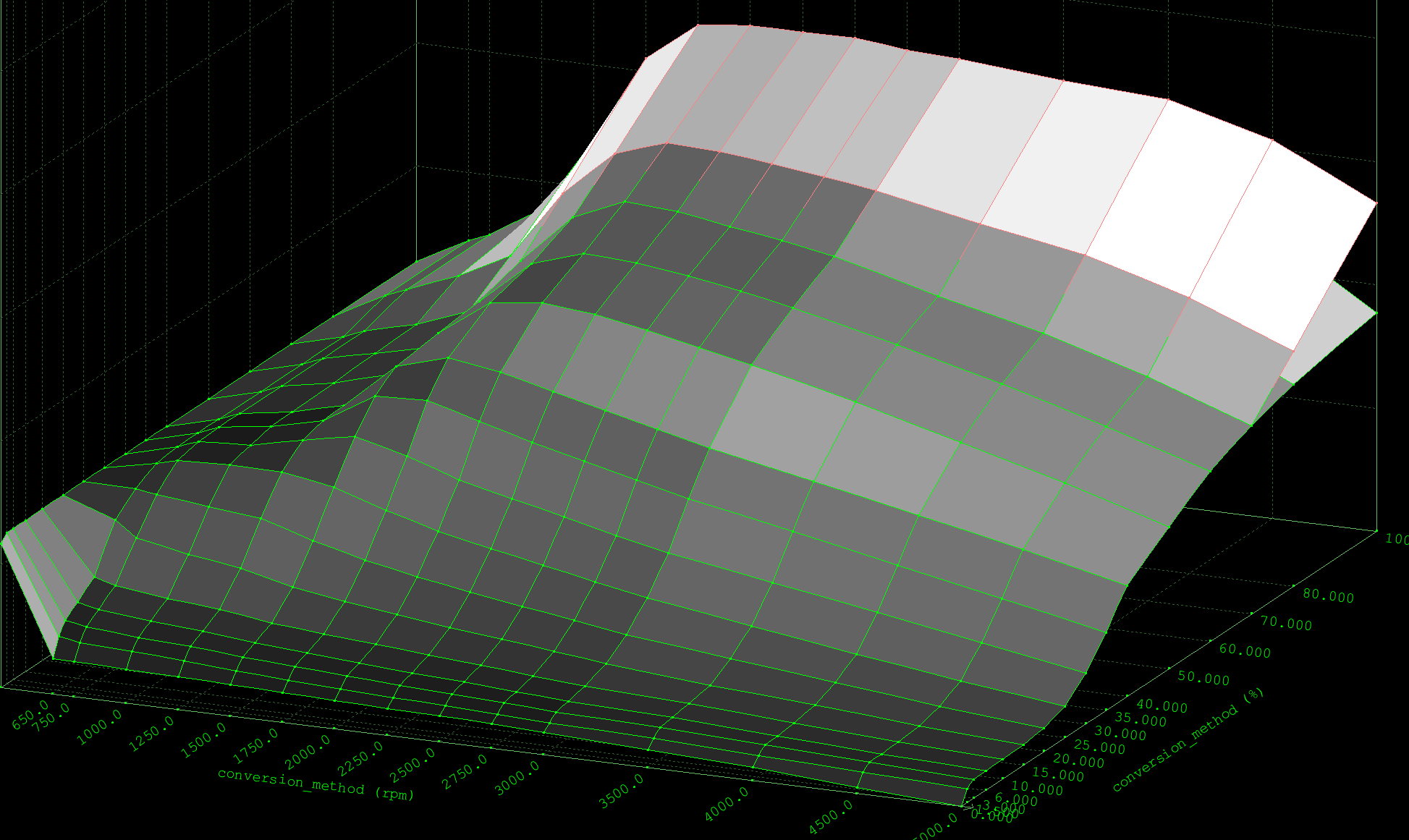
Each drivers wish map has a monitoring map later in the ECU, this must be adjusted by the same amount to prevent the ECU going in to fault mode.
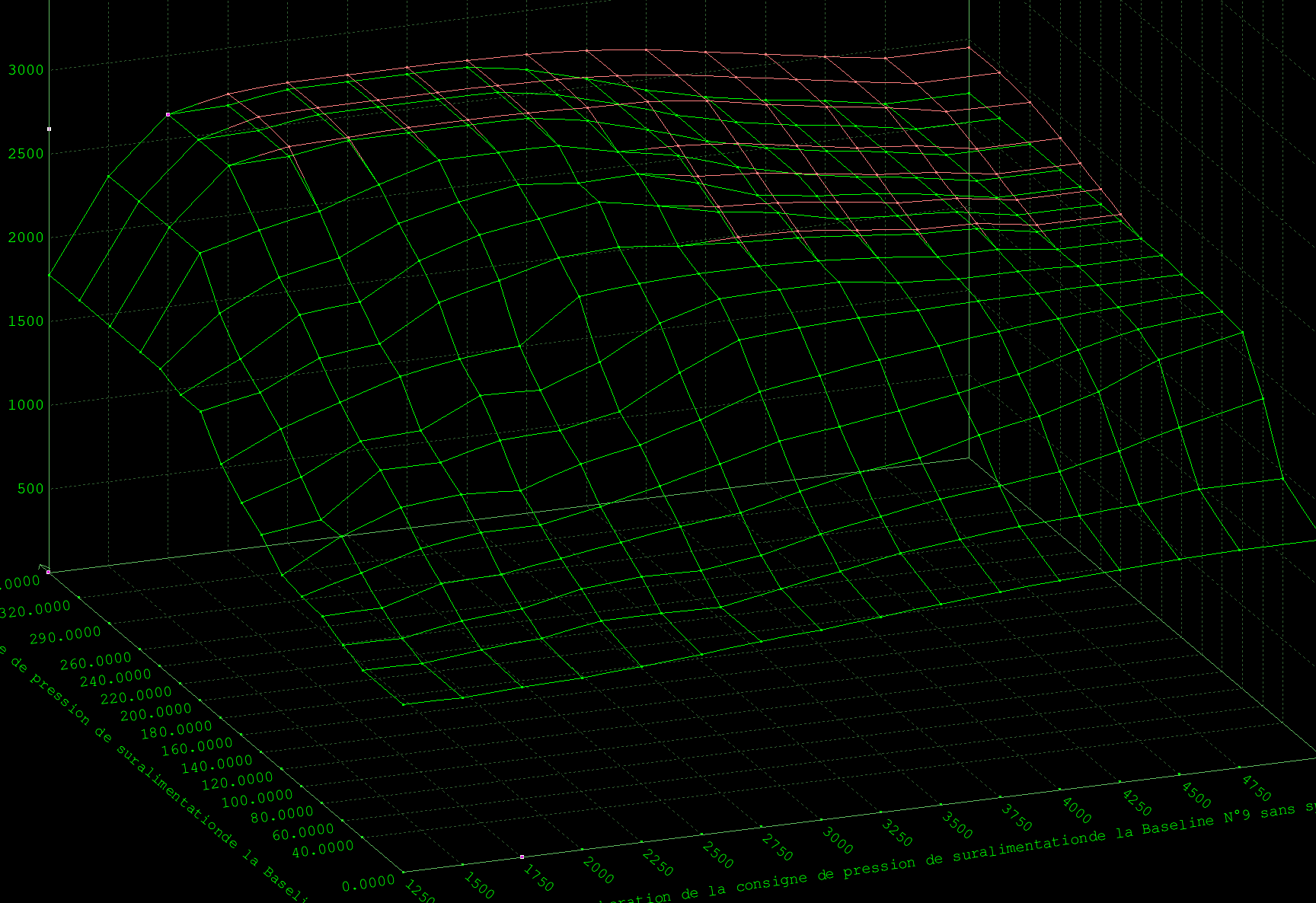
There are typically 24 boost maps to adjust. The stock calibrations are actually well adjusted for a torque increase, but they do drop off at the top end. We don’t need much of an increase here because we want to stay within the safe limits of the turbo. We set a maximum of 2750 mBar absolute pressure whilst stock is 2700 in most maps, some maps even go higher during ‘overboost’ conditions. The main objective of our change here is to prevent it tailing off in the higher RPMs.
Typically we would advise to avoid changing the NM to IQ torque conversion maps in an ECU because that can lead to calculation errors and monitoring errors, however PSA throw I na sneaky trick and they drop off the fuelling on all the conversion maps for any torque value that is above factory mapping. This means we need to make our own calibrations. It’s important to make sure every one of these maps matches up, including the axes, and all of the reverse calculation maps. This gives a huge headache because it’s a lot of work to manually update all of these maps. That’s why we’ve prepared all SW versions of these in advance so that we don’t need to spend an entire day working on each new job and we can deliver your software quickly. There are usually around 60 of these to change depending on the build date.
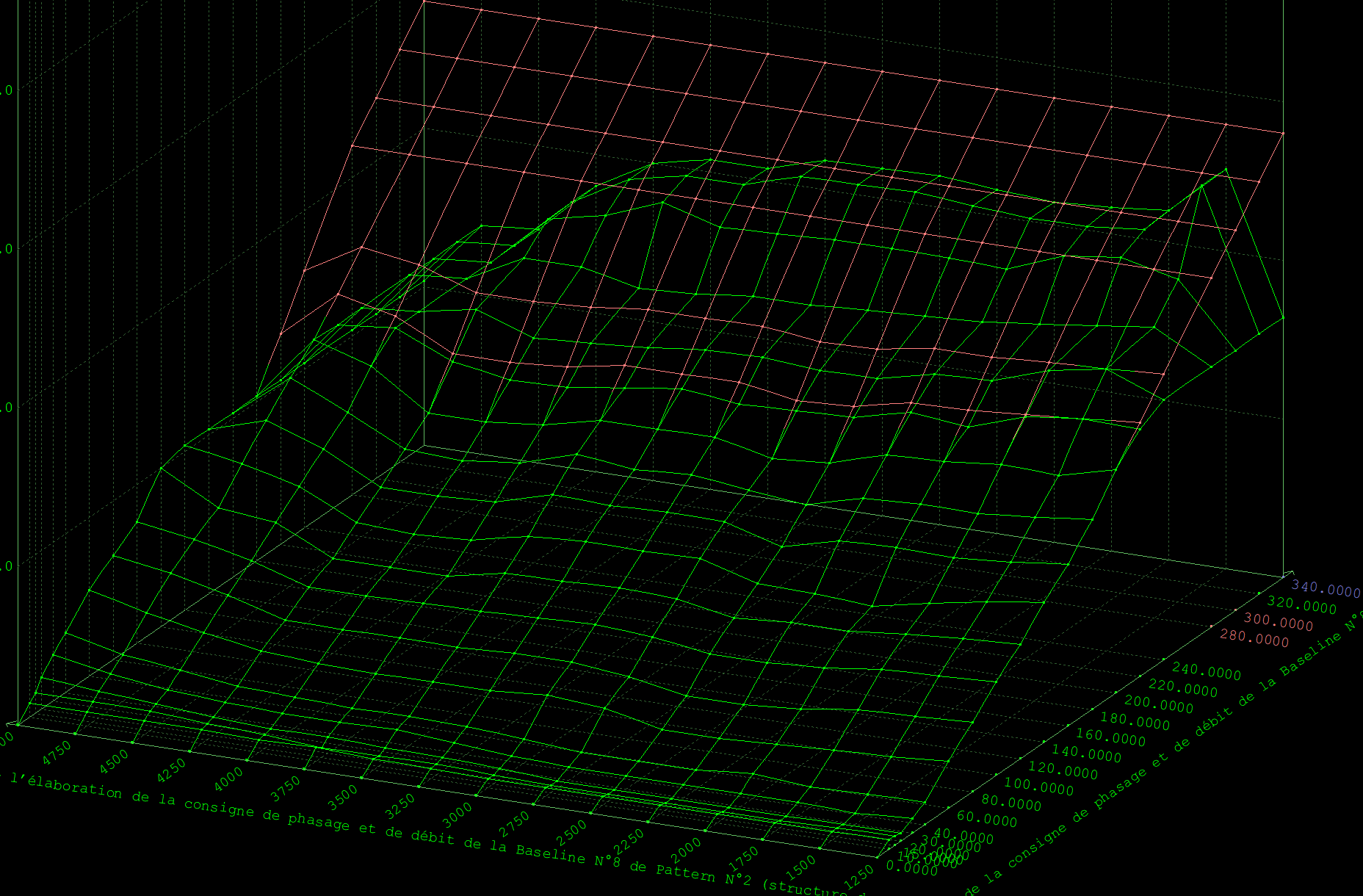
There are many torque monitoring maps which must be updated and adjusted to prevent the ECU from going in to a fault mode. These do not really pose a problem on this ECU because it’s easy to adjust them correctly.
There are approximately 24 2D torque limiter curves, these simply give a maximum torque for each RPM point. These are the nice curves you see when you test the car on a dyno, and during part load conditions you’re riding below these values.
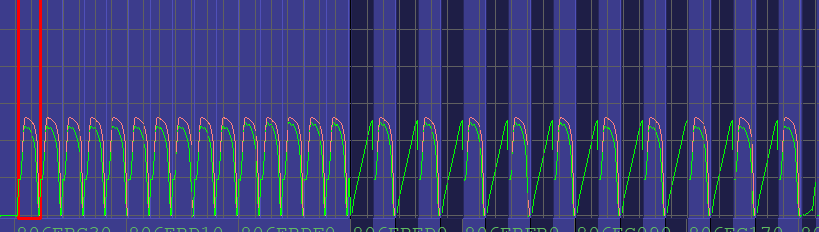
AFR is precisely controlled via the airmass reading as torque based maps. It’s important to calculate the equivalent fuelling to keep a nice clean AFR to prevent the DPF from clogging. Here we increase the fuelling allowed at maximum airflow, but also at the top end where airmass starts to drop off and fuelling cuts off. This helps us to get a good peak BHP figure and allows the engine to keep revving without running out of puff.